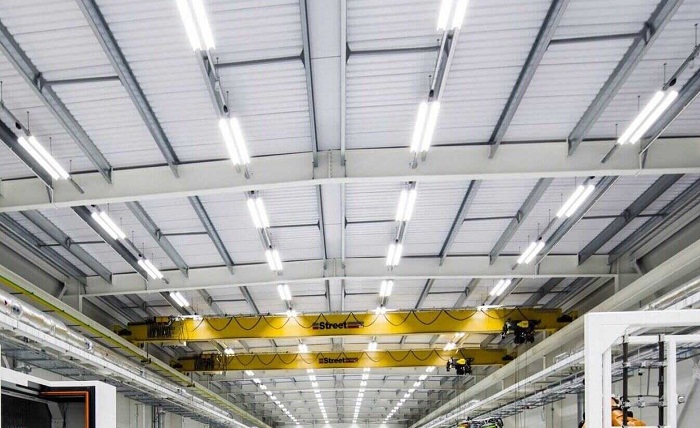
In big business spaces, lighting has a significant impact on how people move, work, and interact. The proper lighting configuration may have a big impact on both productivity and safety in a variety of settings, including workplaces, retail establishments, factories, warehouses, and educational institutions. Even though it’s sometimes disregarded, ceiling lighting in particular serves as the foundation for illumination techniques in large areas. Commercial ceiling lighting improves visibility, lowers dangers, and fosters a more productive workplace when it is well planned and installed.
The Value Of Appropriate Lighting In Big Areas
There are special lighting issues in large business spaces. Wide floor designs, high ceilings, and different activity zones need a calculated strategy to provide uniform lighting. Inadequate illumination may cause eye strain, weariness, and diminished focus, all of which have a detrimental effect on performance.
Conversely, well-thought-out ceiling lighting guarantees that every area of a room has enough light. Employees can do activities more precisely and effectively when there are fewer shadows and dark areas due to uniform brightness. Appropriate illumination becomes crucial to operational performance in environments where speed and accuracy are crucial, such as manufacturing facilities or transportation hubs.
Increasing Worker Productivity With Lighting
People’s emotions and performance are directly impacted by lighting. Maintaining alertness and lowering mental tiredness are two benefits of bright, evenly dispersed light. On the other hand, poor or uneven illumination might cause employees to feel lethargic and demotivated.
Commercial ceiling lights are designed to provide the best possible brightness levels across wide spaces. They enable workers to concentrate for extended periods of time by removing glare and providing steady lighting. This is especially crucial in settings like assembly lines or quality control stations that need close attention to detail.
Adjustable brightness and color temperature are other common features of contemporary lighting systems. Cooler, brighter tones are perfect for offices since they are proven to increase focus and vitality. Businesses may establish a setting that promotes productivity all day long by matching lighting settings to the kind of work being done.
Increasing Safety At Work
Any business environment must prioritize safety, and lighting is essential to minimizing mishaps and injuries. Slips, trips, and crashes are more likely when there is poor visibility, particularly in crowded areas with a lot of foot activity or heavy equipment.
Pathways, workstations, and storage rooms are all easily visible thanks to the broad illumination provided by ceiling-mounted lighting. This lessens the possibility that dangers may go undiscovered. For instance, adequate illumination in warehouses enables employees to securely handle equipment, recognize obstacles, and read labels.
The need for dependable illumination is further highlighted by emergency scenarios. Well-designed lighting systems can swiftly and safely direct residents to exits in the case of a power loss or evacuation. Adding backup lighting options reduces risks and improves readiness.
Cost Savings And Energy Efficiency
In addition to being efficient, modern commercial lighting systems also use less energy. Conventional lighting systems often use a lot of power, which raises operating expenses. On the other hand, cutting-edge ceiling lighting solutions, including LED systems, perform better while using a lot less energy.
Energy-efficient lighting decreases a facility’s total carbon footprint and electricity costs. This makes it a desirable choice for companies looking to strike a balance between sustainability and performance. Longer lifespans also result in fewer replacements and lower maintenance expenses, which add to long-term savings.
Purchasing effective lighting solutions also complies with green building requirements and environmental rules, which are becoming more and more significant in commercial operations and development.
Focus On Lighting Solutions At The Midpoint
Businesses often search for solutions that integrate efficiency, durability, and performance when assessing their lighting requirements. Commercial Ceiling Lights stand out in this situation as a sensible option for big areas. They provide strong lighting without sacrificing energy economy since they are designed to work with large spaces and high ceilings.
In order to minimize shadows and guarantee constant brightness, these lighting systems are designed to disperse light uniformly across large regions. Their sleek designs complement contemporary workplace and retail areas, and their durability makes them appropriate for harsh locations like industrial buildings. Businesses may strike a balance between practicality and style by selecting the appropriate ceiling lighting.
Encouraging Various Work Environments
Commercial ceiling lighting may be customized to satisfy the unique lighting requirements of various businesses. For example:
- Warehouses and Industrial Facilities: High-intensity lighting in warehouses and industrial facilities guarantees visibility across sizable storage spaces and boosts operational effectiveness.
- Offices: Well-balanced lighting helps workers work comfortably and reduces eye strain.
- Retail Stores: Good lighting draws attention to merchandise and improves the shopping experience.
- Healthcare Facilities: Accuracy and hygienic requirements are supported by bright, clean lighting.
Businesses may build settings that promote both performance and well-being by tailoring lighting solutions according to the kind of work.
Cutting Down On Upkeep And Downtime
Maintaining huge commercial premises may be quite difficult. Frequent lighting malfunctions raise expenses in addition to interfering with operations. Because business ceiling lighting systems are made to survive, they need fewer repairs and replacements over time.
Long-lasting bulbs, sturdy fixtures, and intelligent controllers that track performance are common elements of modern lighting systems. These features save downtime and guarantee continued operation by identifying problems before they become serious ones.
Reduced maintenance needs also imply fewer disruptions for workers, freeing them up to concentrate on their work.
Improving Visual Comfort
A significant but sometimes overlooked component of job efficiency is visual comfort. Uneven brightness, flashing lights, and harsh glare may be uncomfortable and ineffective. These problems might eventually result in health problems, including headaches or eye strain.
The goal of commercial ceiling lighting is to provide a pleasant visual environment. These systems reduce glare and uniformly disperse light by using diffusers and sophisticated optics. Employees may work comfortably for longer periods of time in a more pleasant setting as a result.
Because workers are more likely to feel content and involved in a well-lit workplace, improved visual comfort also boosts morale.
Getting Used To Smart Technology
The way lighting systems function has changed due to the incorporation of smart technologies. Features like motion sensors, automated controls, and remote administration are already common in many contemporary ceiling lighting systems.
Businesses can optimize lighting use depending on occupancy and time of day thanks to this technology. For instance, lights may save energy without sacrificing usefulness by automatically dimming or turning off in idle areas. Additionally, smart systems provide useful information on energy use, which enables companies to make well-informed operational choices.
Organizations may increase productivity while upholding strict performance and safety standards by using intelligent lighting systems.
In Conclusion
In vast rooms, commercial ceiling lighting is much more than just a fundamental need. It is a crucial element that affects overall efficiency, safety, and production. The advantages of well-designed lighting systems are many, ranging from enhancing visibility and decreasing accidents to promoting worker wellbeing and cutting energy expenses.
Investing in cutting-edge lighting solutions becomes more crucial as organizations continue to change. Organizations may design spaces that are not only practical but also supportive of development and success by selecting the appropriate ceiling lighting and matching it with certain operational requirements.