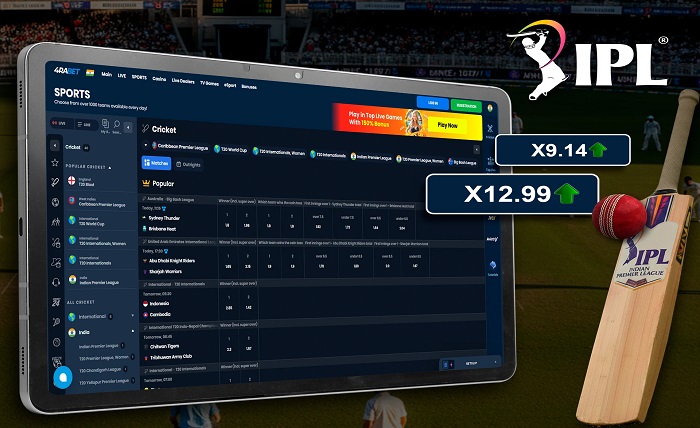
Live cricket browsing happens in quick check-ins. A phone gets unlocked, a match card gets opened, a couple of markets get scanned, and attention snaps back to the score, a message, or whatever is happening nearby. In that pattern, the lobby matters more than extra polish. If the menu holds steady while data refreshes, choices feel straightforward. If the screen shifts, reorders, or hides context, users waste time re-finding their place and end up tapping faster than they want to.
The first screen should stay steady during live updates
During a live match, a refresh is expected. What should not happen is that the page is reshuffled each time data updates. For browsing ipl betting website, the most comfortable pattern is a stable catalog where match cards, market rows, and navigation keep their positions while prices refresh in place. When a new item appears, it should land in a predictable slot rather than pushing buttons down the screen.
A clean first screen also separates what is live right now from general browsing without relying on loud graphics. A simple live marker, a consistent sort order, and a clear back path are enough. If a user opens a match and returns, the list should scroll to the same position. That makes short check-ins feel controlled because the user is not forced to rescan from the top during an active window.
Market layout that supports clean decisions
A betting lobby is a decision surface. Spacing and labeling should do the heavy lifting. Tap targets need room for real thumbs. The interface should acknowledge input immediately, then lock the control during the transition to prevent accidental double action.
Consistency matters more than clever UI tricks. If a match card opens a market view, the return path should bring users back to the same list state. Filters should apply and clear without hiding unrelated sections or changing the order of categories. Search should return stable results in the same session. When those patterns hold, the lobby feels dependable even on mid-range phones where performance can vary.
Match-day checklist that actually catches problems
On a live IPL window, the lobby either stays usable or it starts getting in the way. This quick checklist is the kind that can be run in a couple of minutes on a regular phone, and it shows whether the menu is built for real use or just looks fine at first glance:
- While odds refresh, match cards don’t jump up and down or swap places.
- After opening a match and going back, the list lands exactly where it was, not at the top.
- One tap gets an immediate response, and the button doesn’t stay “clickable” during loading.
- Filters don’t break the page. Clearing them brings the original view back without rearranging everything.
- When tiles and banners finish loading, they fill their slots instead of pushing buttons lower on the screen.
Why steady menus lead to better sessions
When the lobby stays stable, users make fewer rushed moves. They can compare options quickly because labels and prices remain readable. They can step away and come back without losing context. They can treat each action as deliberate because the UI confirms input clearly and avoids surprise state changes.
A well-structured lobby does not need aggressive visuals to keep attention. It earns trust through consistency: stable category order, calm refresh, quick tap feedback, and predictable recovery after interruptions. IPL sessions often happen in short bursts between score checks. A lobby that supports that rhythm feels easier to use, easier to return to, and less likely to cause mistakes when the match is moving fast.